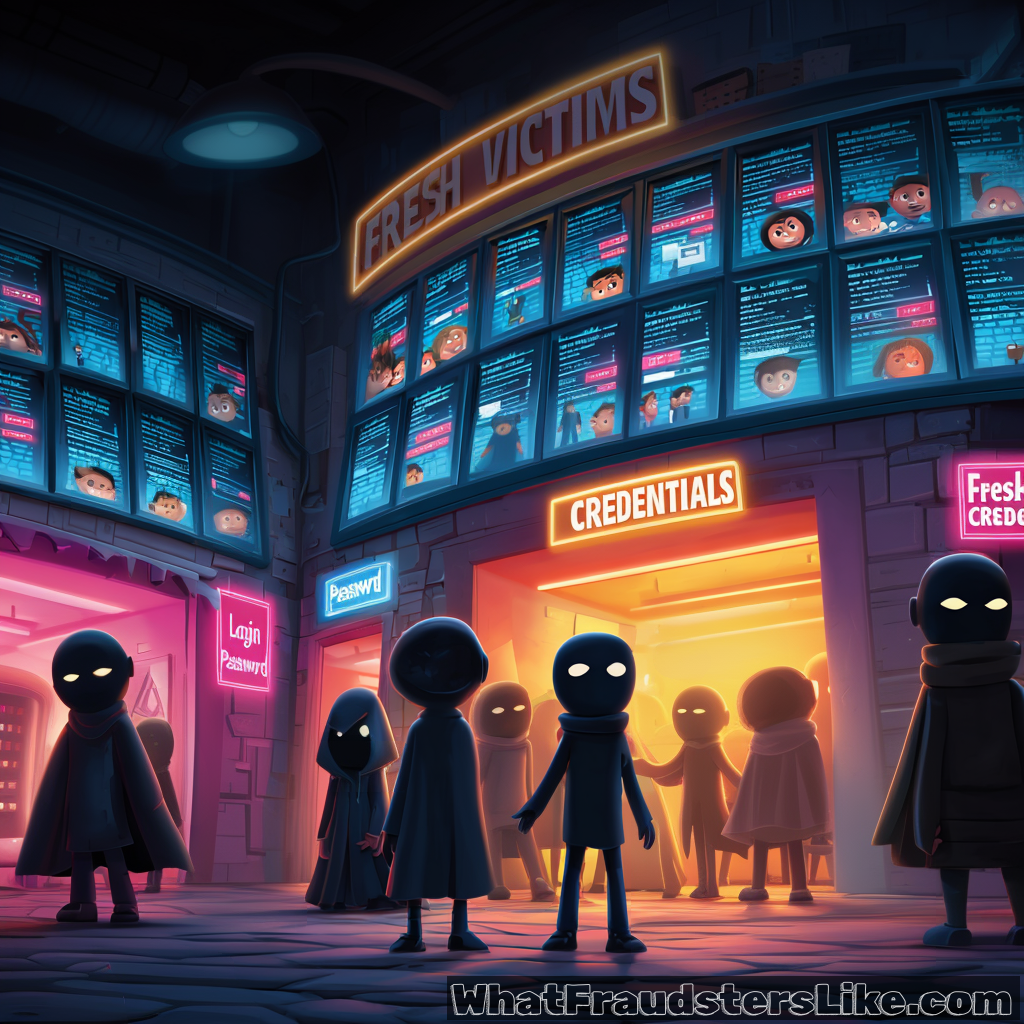
Sarah changed her email password after a data breach. Three days later, her Netflix account was hacked. A week after that, a "bank security alert" landed in her inbox, asking her to verify her account. Coincidence? Not even close.
Think you're safe after surviving one scam? Think again. Once attackers have your details, they don't just move on - they "stay in touch," either directly or by reselling your information. That's why victims face repeated attacks, sometimes within days of the first strike.
The Repeat Attack Playbook:
🔓 Credential Recycling & Dark Web Resale - Stolen passwords are tested across multiple services within hours of a breach. One compromised account becomes a skeleton key. Fresh credentials command premium prices on criminal markets - selling for up to 10x more than aged data - and multiple buyers will target the same victim.
🎯 Proven Targets - Analysis of over 8 million simulated phishing emails found that 67% of employees who fall for one phishing attack are likely to click again. Fraudsters exploit this pattern ruthlessly, treating previous victims as their most reliable prospects.
👴 Elder Re-Targeting - Research tracking 1.33 million scam victims over 20 years reveals victims in their 70s and 80s face 9% higher odds of repeat victimization than those in their 50s. Criminals know older adults who've been scammed once make profitable repeat targets.
⚡ The Freshness Factor - Newly stolen credentials drive rapid follow-up attacks. Security researchers document exploitation attempts within 24-72 hours of data breaches, before most victims even realize they've been compromised.
Out of 1.33 million scam victims tracked over two decades, the pattern is clear: fraudsters treat victims as repeat customers. Fresh stolen credentials get exploited within days. Nearly one in three phishing victims will click malicious links again. And the FBI's 2024 Internet Crime Report documents a staggering $16.6 billion in losses - a 33% increase from 2023 - with repeat victimization playing a significant role[ref].
🚨 So what’s the defense?
For individuals: use unique passwords, reset shared passwords fast after fraud attempt, enable MFA, monitor for breach alerts, and be skeptical of “follow-up” scare emails.
For organizations: detect credential stuffing, enforce resets after breaches, use behavioral analytics, and train staff that lightning can strike twice or thrice.
The good news? Awareness is your best weapon. The FBI's Operation Level Up demonstrated this in 2024 - alerting over 4,300 victims to ongoing cryptocurrency fraud schemes, with 76% being completely unaware they were still being targeted.