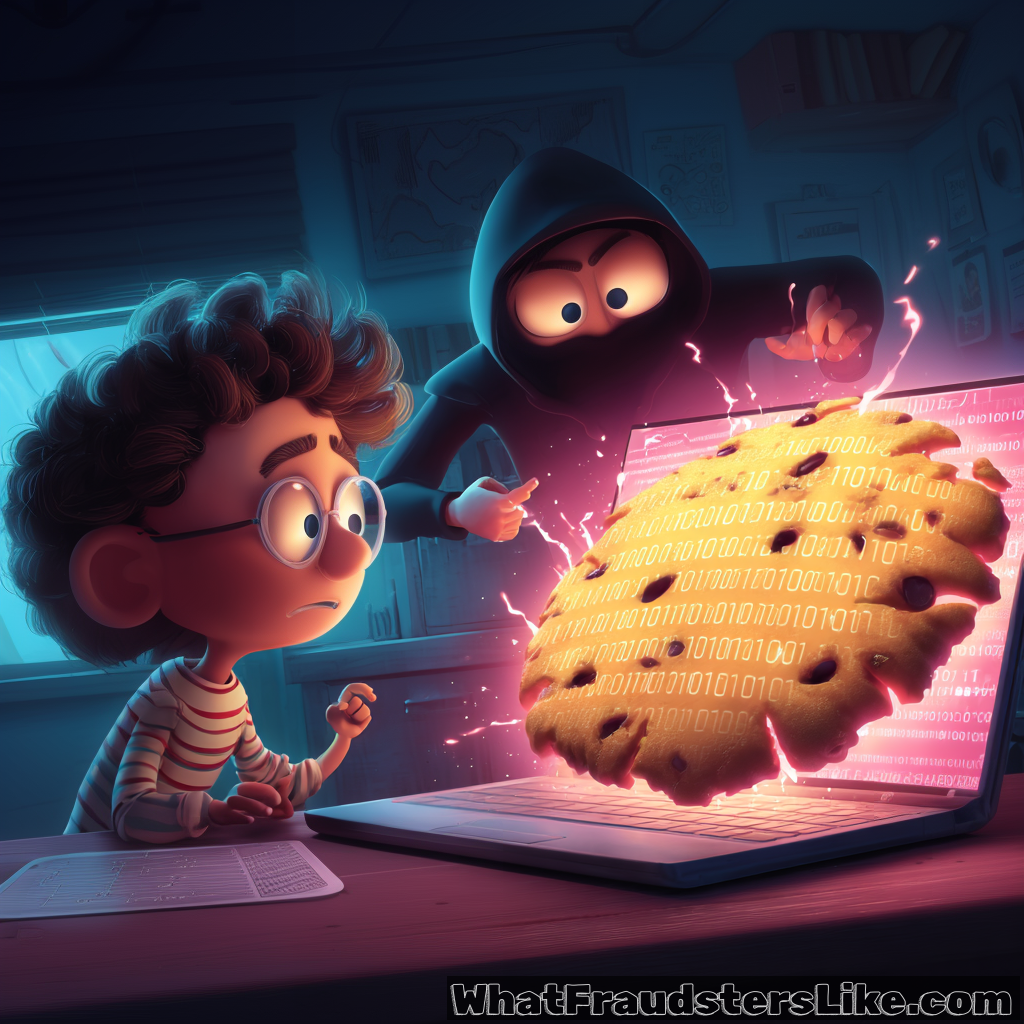
Think of session cookies like a hotel keycard. You check in once (login), and the card gives you access all week. Now imagine someone photocopies your keycard while you're at breakfast - they can walk right into your room, and hotel security thinks they're you.
Why Cookies Are Criminal Gold:
🍪 Instant Account Access - Stolen session cookies let attackers walk right into your accounts without passwords or 2FA codes. It's like stealing a key from the door.
🔑 Bypassing Your Best Defenses - That two-factor authentication you rely on? Useless once a cookie is stolen. Fraudsters simply replay your valid session, and security systems think it's you.
🕵️ Building Your Profile - Tracking cookies reveal your browsing patterns, helping criminals craft personalized phishing attacks that look eerily legitimate.
🤖 Ad-Fraud at Scale - Through "cookie stuffing," criminals trick affiliate programs into paying commissions for sales they never drove - costing advertisers millions.
📦 Dark Web Commodity - Stolen cookie bundles ("logs") sell for just $5-$20 on underground marketplaces, granting access to PayPal accounts, Gmail inboxes, or corporate networks.
The scale is staggering - Microsoft now detects 39,000 session token attacks every single day - that's 27 attacks per minute, 24/7. In 2023 alone, they identified 147,000 token replay attacks, representing a 111% year-over-year surge[ref].
The 2024 Midnight Blizzard incident showed just how dangerous this threat has become. Russian state-sponsored hackers maintained undetected access to Microsoft's corporate environment for months by exploiting stolen tokens and OAuth permissions - demonstrating that even tech giants aren't immune[ref].
Unlike traditional hacking that triggers alarms and leaves footprints, cookie theft is invisible. Attackers don't break down the door; they use your own browser's trust against you.
🚨 How can we protect ourselves:
- Clear cookies weekly, especially after using shared computers and accessing banking and financial sites.
- Use browsers with enhanced cookie protection (Chrome's Enhanced Safe Browsing, Edge's SmartScreen).
- Never log into sensitive accounts on public Wi-Fi without a VPN.
🚨 What can our organizations do:
- Monitor for impossible travel patterns (logins from different continents within minutes).
- Implement short session timeouts (15-30 minutes for sensitive systems).
- Deploy Continuous Access Evaluation (CAE) to automatically revoke compromised sessions.
- Bind session tokens to device fingerprints, making stolen cookies useless on other devices.
- Require step-up authentication for privilege escalation.
In a digital world where the vast majority of data breaches stem from human error, and a cookie is stolen every 2.2 seconds, the question isn't if you'll be targeted - it's whether you'll be protected when it happens.